
Sunday, July 15, 2007

Friday, February 23, 2007
Catastrophic teams
Team Earthquake
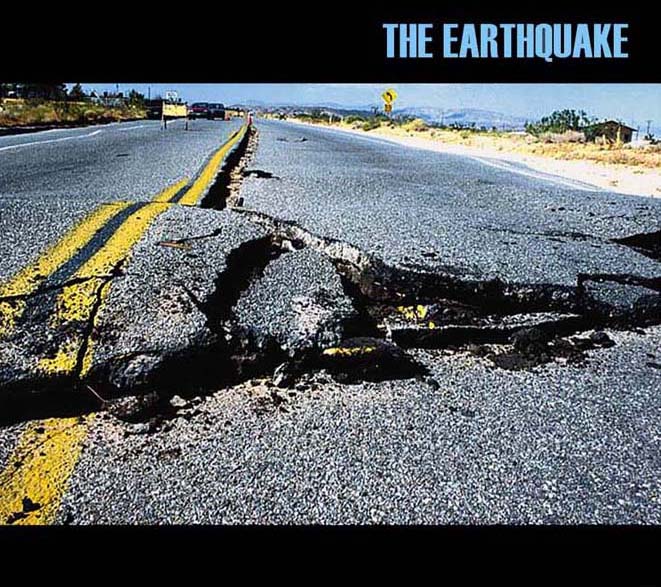

An earthquake is a phenomenon that results from the sudden release of stored energy in the Earth's crust that creates seismic waves. At the Earth's surface, earthquakes may manifest themselves by a shaking or displacement of the ground and sometimes tsunamis, which may lead to loss of life and destruction of property. An earthquake is caused by tectonic plates (the making on the earths crust) getting stuck and putting a strain on the ground. The strain becomes so great that rocks give way and fault lines occur.
Earthquakes may occur naturally or as a result of human activities. In its most generic sense, the word earthquake is used to describe any seismic event—whether a natural phenomenon or an event caused by humans—that generates seismic waves.
Team Tornado


A tornado is a violently rotating column of air which is in contact with both a cumulonimbus (or, in rare cases, cumulus) cloud base and the surface of the earth. Tornadoes can come in many shapes, but are typically in the form of a visible condensation funnel, with the narrow end touching the earth. Often, a cloud of debris encircles the lower portion of the funnel.
Most tornadoes have winds of 110 mph (175 km/h) or less, are approximately 250 feet (75 meters) across, and travel a few miles (several kilometers) before dissipating. However, some tornadoes can have winds of more than 300 mph (480 km/h), be more than a mile (1.6 km) across, and stay on the ground for dozens of miles (more than 100 kilometers).
Tornadoes have been observed on every continent except Antarctica; however, most of the world's tornadoes occur in the United States. Other areas which commonly experience tornadoes include New Zealand, western and southeastern Australia, south-central Canada, northwestern and central Europe, Italy, south-central and eastern Asia, east-central South America, and Southern Africa.
Team Tsunami

A tsunami) is a series of waves created when a body of water, such as an ocean, is rapidly displaced on a massive scale. Earthquakes, mass movements above or below water, volcanic eruptions and other underwater explosions, landslides, large meteorite impacts and testing with nuclear weapons at sea all have the potential to generate a tsunami. The effects of a tsunami can range from unnoticeable to devastating. The term tsunami comes from the Japanese words meaning harbor ("tsu", 津) and wave ("nami", 波). Although in Japanese tsunami is used for both the singular and plural, in English tsunamis is often used as the plural. The term was created by fishermen who returned to port to find the area surrounding their harbor devastated, although they had not been aware of any wave in the open water. Tsunami are common throughout Japanese history; approximately 195 events in Japan have been recorded.
A tsunami has a much smaller amplitude (wave height) offshore, and a very long wavelengthTsunami have been historically referred to as tidal wavestide rather than the sort of cresting waves that are formed by wind action upon the ocean (with which people are more familiar). Since they are not actually related to tides the term is considered misleading and its usage is discouraged by oceanographers. [1] Since not all tsunami occur in harbors, however, that term is equally misleading, although it does have the benefit of being misleading in a different language. (often hundreds of kilometers long), which is why they generally pass unnoticed at sea, forming only a passing "hump" in the ocean. because as they approach land, they take on the characteristics of a violent onrushing
Team Hurricane
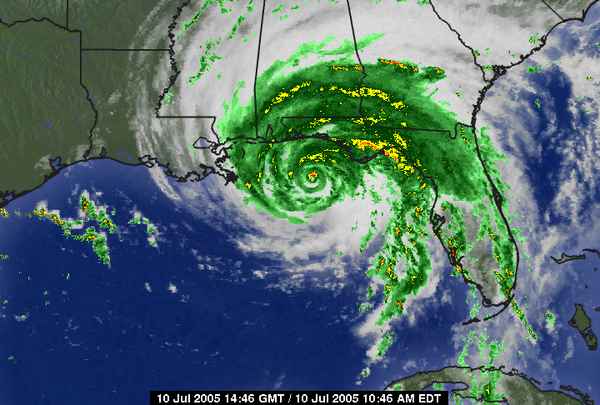
A severe tropical cyclone in the North Atlantic Ocean, Caribbean Sea, Gulf of Mexico, or in the eastern North Pacific off the west coast of Mexico with winds of 75 miles per hour or greater accompanied by rain, lightning, and thunder that sometimes moves into temperate latitudes. Variant names given to the same type of storm in other areas of the world include typhoon (eastern Asia), cyclone (India), willy willy (Australia), and baguio (China Sea).
Team Avalanche


AVALANCHE is an ecoterrorist organization from the Square Co., Ltd. computer role-playing game Final Fantasy VII. They are antagonists to a multi-conglomerate, Shin-Ra, and their actions involving using the lifeforce of the Planet, Lifestream, and converting it into Mako energy for everyday usable power such as electricity. These actions are having detremental affects on the Planet, which AVALANCHE is determined to prevent.
Team Cyclone

A tropical revolving storm with winds of hurricane force, circulating anti-clockwise in the northern Hemisphere and clockwise in the Southern hemisphere. In temperate latitudes a cyclone is properly a Depression. In the West Indies a cyclone is called a hurricane. In the China Seas it is known as a typhoon. In Australia it is called a 'Willy-Willy'. The name cylone originated in the Indian Ocean.
Monday, December 04, 2006
Examples of programming languages
 Here is a list non-exhaustive of programming languages :
Assembler
An assembler is a program that takes basic computer instructions and converts them into a pattern of bits that the computer's processor can use to perform its basic operations.
In the earliest computers, programmers actually wrote programs in machine code, but assembler languages or instruction sets were soon developed to speed up programming. Today, assembler programming is used only where very efficient control over processor operations is needed. It requires knowledge of a particular computer's instruction set, however. Historically, most programs have been written in "higher-level" languages such as C. These languages are easier to learn and faster to write programs with than assembler language.
C
C is a structured, procedural programming language that has been widely used both for operating systems and applications and that has had a wide following in the academic community. Many versions of UNIX-based operating systems are written in C. With the increasing popularity of object-oriented programming, C is being rapidly replaced as "the" programming language by C++, a superset of the C language that uses an entirely different set of programming concepts.
C++
C++ is an object-oriented programming language that is now generally viewed as the best language for creating large-scale application programs. C++ is a superset of the C language.
HTML (Hypertext Markup Language)
HTML is the set of "markup" symbols or codes inserted in a file intended for display on a World Wide Web browser. The markup tells the Web browser how to display a Web page's words and images for the user.
HTML is defined in practice both by Netscape and Microsoft as they add changes to their Web browsers and more officially for the industry by the World Wide Web Consortium (W3C). A new version of HTML called HTML 4 has recently been officially recommended by W3C, making this level an effective standard.
JavaScript
JavaScript is an interpreted programming or script language from Netscape. In general, script languages are easier and faster to code in than the more structured and compiled languages such as C and C++ and are ideal for programs of limited capability or that can reuse and tie together existing compiled programs.
JavaScript is used in Web site development to do such things as:
Automatically change a formatted date on a Web page
Cause a linked-to page to appear in a popup window
Cause text or a graphic image to change during a mouse rollover
JavaScript uses some of the same ideas found in Java, the compiled object-oriented language derived from C++. JavaScript code can be imbedded in HTML pages and interpreted by the Web browser (or client).
Types of programming errors
 Programs often contain errors which may cause the program not to run or, even worse, to run but yield incorrect results. Much of the task of programming is to locate and correct these errors to produce a program that runs correctly.
There are two main classes of errors : syntax (or grammatical) errors and semantic (or logical) errors :
Syntax errors
This first class of errors that can be made are relatively easy to detect, in the first case by a human and in the second case by a compiler at compile-time. It's just like a grammar error in a language. For example in English : "I is hungry" instead of "I am hungry".
Semantic errors
This second class of errors that can be made are much harder to detect for humans and in general impossible for the compiler to pick up (obviously the computer does not know what the programmer intended). If we keep the example of the English language, it's like if you tell somebody : "Let's meet tomorrow at 8am" but you meant 8pm.
Programming style

Programming style is a term used to describe the effort a programmer should take to make his or her code easy to read and easy to understand. No two programmers write the code identically, so the way to name variables, to structure the logic, or to organize the code has to follow a certain logic.
Here are styles and conventions to help any reader to understand what the program does and why.
Minimize the number of lines of Code.
Minimize the number of variables - localize as much as possible.
Minimize the number of routines - localize as much as possible.
Modules are free standing and have a specific objective. Just keep everything simple. The fewer of anything you have in your code, the easier it is to reuse, maintain, and enhance.
Give your variables, functions, and types self-explanatory names easy to understand for everybody (including you). Make sure it's not the same as a program command. Calling them i and j is short, and easy to type, but hard to debug.
Indent your code to make it legible. It will help you to see the blocks of the program easily. You can use whatever spacing looks good to you, but indent at least 2 spaces.
Comment your code liberally. If your program can be broken down easily into stages, comment each stage. If you have defined your own functions or datatypes, comment them extensively, explaining what they do, and what they're for. If you come up with an implementation that's in any way obscure, cute, or hacked, comment it well. You may want to use the same trick again someday, and it's helpful to know how it worked.
The Elements of Programming Style
1. Say what you mean, simply and directly.
2. Write clearly - don't be too clever.
3. Don't use conditional expressions as a substitute for a logical expression.
4. Parenthesize to avoid ambiguity.
5. Follow each decision as closely as possible with its associated action.
6. Use the good features of a language; avoid the bad ones.
7. Each module should do one thing well.
8. Make sure comments and code agree.
9. Don't just echo the code with comments - make every comment count.
10. Don't comment bad code - rewrite it.
11. Use symbolic constants for magic numbers.
12. Watch out for side effects and order of evaluation.
13. Macros are not functions.
14. Watch out for off-by-one errors.
15. Test programs at their boundaries.
16. Program defensively.
17. Make sure input cannot violate the limits of the program.
18. Make it right before you make it faster.
19. Keep it right when you make it faster.
20. Don't sacrifice clarity for small gains in efficiency.
21. Don't stop with your first draft.
The phases of development

In order to do a good computer program there are different phases of development to respect :
Problem Solving Phase
Analysis and Specification : understand (define) the problem and what the solution must do.
Algorithm Development : develop a comprehensive unambiguous logical sequence of steps to solve the problem.
Verification of Algorithm : follow steps closely (manually) to see if solution works.
Implementation Phase
Program Development : translate algorithm into a program written in a programming language.
Program Testing : test program for syntactical and logical errors. Fix the errors.
Maintenance Phase
Use : use the program to solve real world problems.
Maintain : modify the program to meet changing r
What is a computer program ?

In computing, a program is a specific set of ordered operations for a computer to perform. In the modern computer that John von Neumann outlined in 1945, the program contains a one-at-a-time sequence of instructions that the computer follows. Typically, the program is put into a storage area accessible to the computer. The computer gets one instruction and performs it and then gets the next instruction. The storage area or memory can also contain the data that the instruction operates on. (Note that a program is also a special kind of "data" that tells how to operate on "application or user data.")
Programs can be characterized as interactive or batch in terms of what drives them and how continuously they run. An interactive program receives data from an interactive user (or possibly from another program that simulates an interactive user). A batch program runs and does its work, and then stops. Batch programs can be started by interactive users who request their interactive program to run the batch program. A command interpreter or a Web browser is an example of an interactive program. A program that computes and prints out a company payroll is an example of a batch program. Print jobs are also batch programs.
When you create a program, you write it using some kind of computer language. Your language statements are the source program. You then "compile" the source program (with a special program called a language compiler) and the result is called an object program (not to be confused with object-oriented programming). There are several synonyms for object program, including object module and compiled program. The object program contains the string of 0s and 1s called machine language that the logic processor works with.
The machine language of the computer is constructed by the language compiler with an understanding of the computer's logic architecture, including the set of possible computer instructions and the length (number of bits) in an instruction.
Programs can be characterized as interactive or batch in terms of what drives them and how continuously they run. An interactive program receives data from an interactive user (or possibly from another program that simulates an interactive user). A batch program runs and does its work, and then stops. Batch programs can be started by interactive users who request their interactive program to run the batch program. A command interpreter or a Web browser is an example of an interactive program. A program that computes and prints out a company payroll is an example of a batch program. Print jobs are also batch programs.
When you create a program, you write it using some kind of computer language. Your language statements are the source program. You then "compile" the source program (with a special program called a language compiler) and the result is called an object program (not to be confused with object-oriented programming). There are several synonyms for object program, including object module and compiled program. The object program contains the string of 0s and 1s called machine language that the logic processor works with.
The machine language of the computer is constructed by the language compiler with an understanding of the computer's logic architecture, including the set of possible computer instructions and the length (number of bits) in an instruction.
Friday, November 24, 2006
Various forms of blogs
Using weblogs to explore various possibilities for constructing fictional works, Blog fiction is a burgeoning format for creative digital writing and distribution on the Internet, rising in popularity when free, automated blog generators began appearing in 1999 and, most likely, will come to full artistic fruition within the iGeneration. Echoing eighteenth century pamphleteering and the serialized publication of fictional works from the eighteenth century to the present day, such as Laurence Sterne’s Tristram Shandy (1759-67), many of Charles Dickens' novels, Sir Arthur Conan Doyle's Sherlock Holmes series, and Henry James' The Ambassadors (1903, with each of its twelve parts appearing in The North American Review before being published as a whole that same year), blog fiction appears in short installments of textual pieces, lexia, that must both stand on their own and work towards a larger whole. Congruent with the general shrinking attention spans of the Internet Age, each episode in blog fiction is much shorter than a serialized nineteenth century or early twentieth century novel. As blog fictionist Diego Doval asks, "is it possible to create a story that makes sense, keeps the reader engaged, and yet can be 'consumed' in bits and pieces, maybe even in any order?" (see "What is Plan B?"). Doval's comment reflects the contemporary writer's conundrum, caught between models of high literature and the avant-garde that dare to provoke, challenge and even bore readers on one hand and the insatiable desires of late capitalist consumers for "entertainment" within a channel-flicking, website-saturated universe of endless choices. The sheer volume of quickly-accessible written material within "clickable culture" exacerbates the artistic quandary for the blog fictionist, especially because of the myriad of non-fiction blogs and electronic writing available. Isabella V likewise comments, "You, humble reader, if you do in fact exist. If you even care. You are my safety net. In return I suppose I have to keep you entertained. Keep you reading. That's the bargain. Keep your watchful eye on me- so that you might notice if I vanish suddenly. So that you might ask the questions that would save me. I will, in turn, try to keep you reading"
By media type
A blog comprising videos is called a vlog, one comprising links is called a linklog, or one comprising photos is called a photoblog.
By deviceBlogs
can also be defined by which type of device is used to compose it. A blog written by a mobile device like a mobile phone or PDA is called a moblog.
Genre
Some blogs focus on a particular subject, such as political blogs or travel blogs or legal blogs (often referred to as a blawg).Legal status of publishersA blog can be private, as in most cases, or it can be for business purposes. Blogs, either used internally to enhance the communication and culture in a corporation or externally for marketing, branding or PR purposes are called corporate blogs.Blog search enginesSeveral blog search engines are used to search blog contents (also known as the blogosphere), such as blogdigger, Feedster, and Technorati. Technorati provides current information on both popular searches and tags used to categorize blog postings.
Crisis of legitimation
Though many critics and literary scholars dismiss blog fiction as an inferior and faddish literary form, there is a trend towards the recognition of blogs as a legitimate arena of fiction production. For instance, self-publishing provider Lulu sponsors the "Blooker" prize, which began in 2006. The Blooker prize is an award given to the best "blook" of the year: a work of fiction begun as blog fiction and then transformed into a printed publication. Thus, even despite the radical and democratizing potential of blog fiction, printed works still maintain greater authority and "official" status in the world of fiction and academia.Educational values of blogs

Blogs have many uses especially in educational fields. They provide information to the reader or visitor. It also develops our creativity and awakening our mind to technological advancement in the trend of computers. And these blogs serves as a tool of communication today.
There seems to be a consensus in the (education) literature about the importance of discourse and dialogue in learning. While blogs are certainly communication tools that can accommodate dialogic communication, there are all kinds of other communications-technology tools that can do the same thing.
Eye Talk

What makes Daniel Barenboim differ from his contemporaries?
- Daniel Barenboim is a musician who makes the music of love, peace and unity which inspires the people and also his colleagues, that's what makes him different.
Do you think he is justified on what he was doing?
- "No, it's not. The conductor decides on the orchestra, the times, the music etc. But when the orchestra plays and it is either unwilling or unable to play like the conductor wanted, he is totally powerless. And as powerlessness often does, it makes people think they are very powerful. And that's why conductors' egos are so famous" daniel said.
If Daniel were in the Philippines, what similar issues do you think you would address?
- Well, it will be pretty good if daniel were here because daniel is a musician who makes the music of peace, unity and love as stated above, he can touch the hearts of the terrorists and begin united as well as the beginning of prosperity arise.

Subscribe to:
Comments (Atom)


