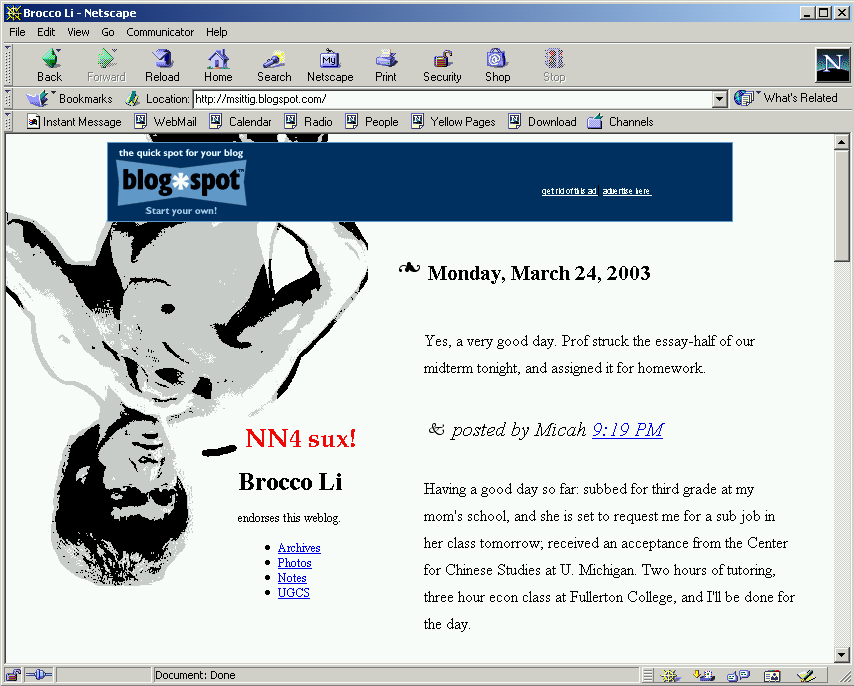
Using weblogs to explore various possibilities for constructing fictional works, Blog fiction is a burgeoning format for creative digital writing and distribution on the Internet, rising in popularity when free, automated blog generators began appearing in 1999 and, most likely, will come to full artistic fruition within the iGeneration. Echoing eighteenth century pamphleteering and the serialized publication of fictional works from the eighteenth century to the present day, such as Laurence Sterne’s Tristram Shandy (1759-67), many of Charles Dickens' novels, Sir Arthur Conan Doyle's Sherlock Holmes series, and Henry James' The Ambassadors (1903, with each of its twelve parts appearing in The North American Review before being published as a whole that same year), blog fiction appears in short installments of textual pieces, lexia, that must both stand on their own and work towards a larger whole. Congruent with the general shrinking attention spans of the Internet Age, each episode in blog fiction is much shorter than a serialized nineteenth century or early twentieth century novel. As blog fictionist Diego Doval asks, "is it possible to create a story that makes sense, keeps the reader engaged, and yet can be 'consumed' in bits and pieces, maybe even in any order?" (see "What is Plan B?"). Doval's comment reflects the contemporary writer's conundrum, caught between models of high literature and the avant-garde that dare to provoke, challenge and even bore readers on one hand and the insatiable desires of late capitalist consumers for "entertainment" within a channel-flicking, website-saturated universe of endless choices. The sheer volume of quickly-accessible written material within "clickable culture" exacerbates the artistic quandary for the blog fictionist, especially because of the myriad of non-fiction blogs and electronic writing available. Isabella V likewise comments, "You, humble reader, if you do in fact exist. If you even care. You are my safety net. In return I suppose I have to keep you entertained. Keep you reading. That's the bargain. Keep your watchful eye on me- so that you might notice if I vanish suddenly. So that you might ask the questions that would save me. I will, in turn, try to keep you reading"
By media type
A blog comprising videos is called a vlog, one comprising links is called a linklog, or one comprising photos is called a photoblog.
By deviceBlogs
can also be defined by which type of device is used to compose it. A blog written by a mobile device like a mobile phone or PDA is called a moblog.
Genre
Some blogs focus on a particular subject, such as political blogs or travel blogs or legal blogs (often referred to as a blawg).Legal status of publishersA blog can be private, as in most cases, or it can be for business purposes. Blogs, either used internally to enhance the communication and culture in a corporation or externally for marketing, branding or PR purposes are called corporate blogs.Blog search enginesSeveral blog search engines are used to search blog contents (also known as the blogosphere), such as blogdigger, Feedster, and Technorati. Technorati provides current information on both popular searches and tags used to categorize blog postings.
Crisis of legitimation
Though many critics and literary scholars dismiss blog fiction as an inferior and faddish literary form, there is a trend towards the recognition of blogs as a legitimate arena of fiction production. For instance, self-publishing provider Lulu sponsors the "Blooker" prize, which began in 2006. The Blooker prize is an award given to the best "blook" of the year: a work of fiction begun as blog fiction and then transformed into a printed publication. Thus, even despite the radical and democratizing potential of blog fiction, printed works still maintain greater authority and "official" status in the world of fiction and academia.


