Team Earthquake
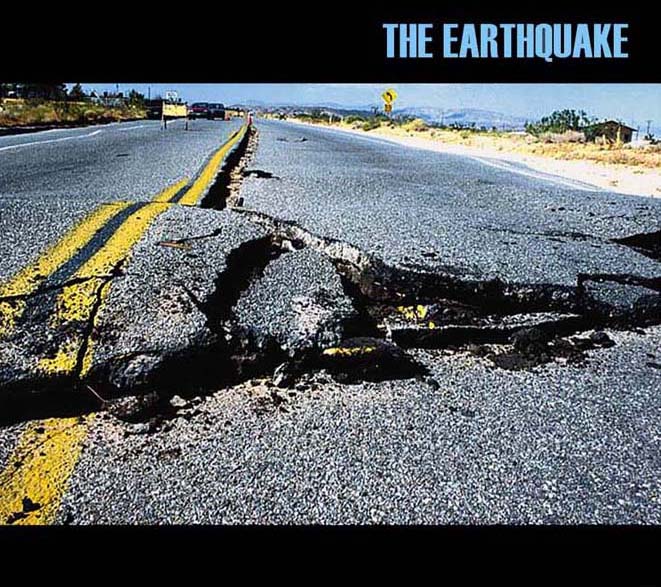
An earthquake is a phenomenon that results from the sudden release of stored energy in the Earth's crust that creates seismic waves. At the Earth's surface, earthquakes may manifest themselves by a shaking or displacement of the ground and sometimes tsunamis, which may lead to loss of life and destruction of property. An earthquake is caused by tectonic plates (the making on the earths crust) getting stuck and putting a strain on the ground. The strain becomes so great that rocks give way and fault lines occur.
Earthquakes may occur naturally or as a result of human activities. In its most generic sense, the word earthquake is used to describe any seismic event—whether a natural phenomenon or an event caused by humans—that generates seismic waves.
Team Tornado


A tornado is a violently rotating column of air which is in contact with both a cumulonimbus (or, in rare cases, cumulus) cloud base and the surface of the earth. Tornadoes can come in many shapes, but are typically in the form of a visible condensation funnel, with the narrow end touching the earth. Often, a cloud of debris encircles the lower portion of the funnel.
Most tornadoes have winds of 110 mph (175 km/h) or less, are approximately 250 feet (75 meters) across, and travel a few miles (several kilometers) before dissipating. However, some tornadoes can have winds of more than 300 mph (480 km/h), be more than a mile (1.6 km) across, and stay on the ground for dozens of miles (more than 100 kilometers).
Tornadoes have been observed on every continent except Antarctica; however, most of the world's tornadoes occur in the United States. Other areas which commonly experience tornadoes include New Zealand, western and southeastern Australia, south-central Canada, northwestern and central Europe, Italy, south-central and eastern Asia, east-central South America, and Southern Africa.
Team Tsunami

A tsunami) is a series of waves created when a body of water, such as an ocean, is rapidly displaced on a massive scale. Earthquakes, mass movements above or below water, volcanic eruptions and other underwater explosions, landslides, large meteorite impacts and testing with nuclear weapons at sea all have the potential to generate a tsunami. The effects of a tsunami can range from unnoticeable to devastating. The term tsunami comes from the Japanese words meaning harbor ("tsu", 津) and wave ("nami", 波). Although in Japanese tsunami is used for both the singular and plural, in English tsunamis is often used as the plural. The term was created by fishermen who returned to port to find the area surrounding their harbor devastated, although they had not been aware of any wave in the open water. Tsunami are common throughout Japanese history; approximately 195 events in Japan have been recorded.
A tsunami has a much smaller amplitude (wave height) offshore, and a very long wavelengthTsunami have been historically referred to as tidal wavestide rather than the sort of cresting waves that are formed by wind action upon the ocean (with which people are more familiar). Since they are not actually related to tides the term is considered misleading and its usage is discouraged by oceanographers. [1] Since not all tsunami occur in harbors, however, that term is equally misleading, although it does have the benefit of being misleading in a different language. (often hundreds of kilometers long), which is why they generally pass unnoticed at sea, forming only a passing "hump" in the ocean. because as they approach land, they take on the characteristics of a violent onrushing
Team Hurricane
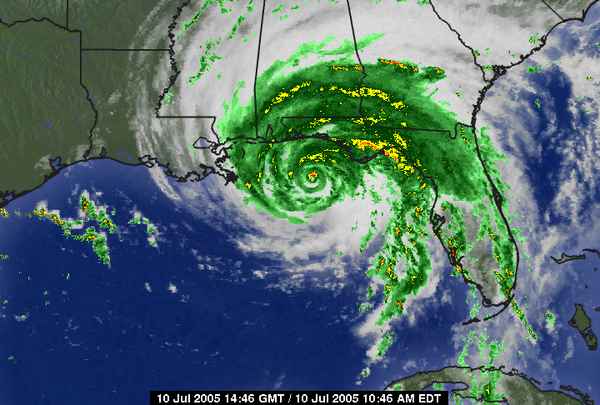
A severe tropical cyclone in the North Atlantic Ocean, Caribbean Sea, Gulf of Mexico, or in the eastern North Pacific off the west coast of Mexico with winds of 75 miles per hour or greater accompanied by rain, lightning, and thunder that sometimes moves into temperate latitudes. Variant names given to the same type of storm in other areas of the world include typhoon (eastern Asia), cyclone (India), willy willy (Australia), and baguio (China Sea).
Team Avalanche


AVALANCHE is an ecoterrorist organization from the Square Co., Ltd. computer role-playing game Final Fantasy VII. They are antagonists to a multi-conglomerate, Shin-Ra, and their actions involving using the lifeforce of the Planet, Lifestream, and converting it into Mako energy for everyday usable power such as electricity. These actions are having detremental affects on the Planet, which AVALANCHE is determined to prevent.
Team Cyclone

A tropical revolving storm with winds of hurricane force, circulating anti-clockwise in the northern Hemisphere and clockwise in the Southern hemisphere. In temperate latitudes a cyclone is properly a Depression. In the West Indies a cyclone is called a hurricane. In the China Seas it is known as a typhoon. In Australia it is called a 'Willy-Willy'. The name cylone originated in the Indian Ocean.


